Community Corner
Residents Voice Opinions on Special Warfare Coastal Campus
The meeting was a first step in a two-year long process to approve a Naval Base Coronado Coastal Campus for Naval Special Warfare Command training.




The Navy had its first meeting to get the public's opinions on a proposed Naval Base Coronado Coastal Campus Tuesday. Much of the activity being considered may take place near Imperial Beach.
Comments made at meetings or online or by mail by July 30 will be used to help form an Environmental Impact Statement (EIS). A meeting will be held .
The proposal to builld 25 different buildings or projects to support the new campus will be be defined during the EIS process.
A draft EIR is scheduled to be released by summer 2013 and a final decision will be made a year later.
An expansion is necessary the Department of the Navy said to meet operational readiness mandates set by Congress.
About 30 U. S. Navy staff and contractors came to the meeting with about 15 members of the public in attendance. NBC Coronado Commanding Officer Captain Gary Mayes was also present.
There are four prescribed options for the campus: build primarily in the northern portion of Silver Strand Training Complex (SSTC) South, build across SSTC South and up to the Coronado-Imperial Beach border, build across Coronado and IB Navy installations or no action at all.
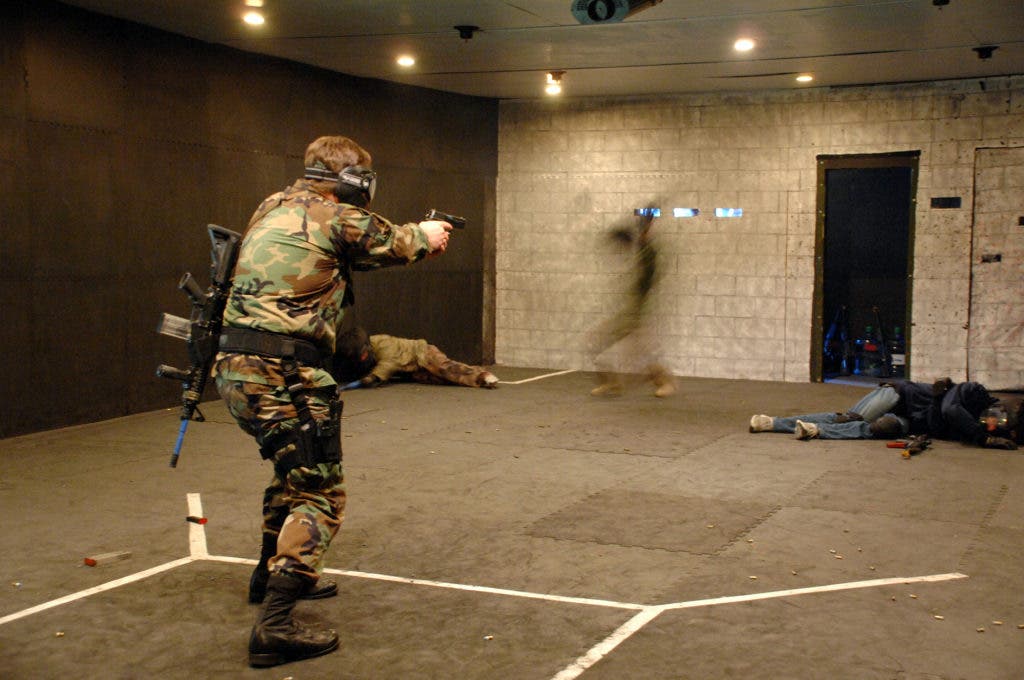
New facilities for the Coastal Campus could allow small craft engineering, indoor classroom instruction, indoor shooting and training in things like hostage takedowns and a place for Navy SEALs to store their equipment.
Find out what's happening in Imperial Beachwith free, real-time updates from Patch.
"Our biggest issue is just how scattered we are," said Gary Alchin with Naval Special Warfare Command (NSWC).
NSWC forces have nearly doubled since 9/11, and will see a 500 sailor increase in the next five years. Command is scattered across dozens of Naval Amphibious Base Coronado facilities, Alchin said, some dating back to World War II.
"That's not what we need for our elite forces," he said.
"These facilities are really for forces that are here now," he said. "We only have about half of what we need."
Find out what's happening in Imperial Beachwith free, real-time updates from Patch.
Edward Feltis lives at the corner of 3rd Street and Palm Avenue. Currently traffic at is a bigger impact to the area than sailors going to Silver Strand Training Complex South.
Add traffic to the area from the expansion and that could change, he said.
"If you toss 300 cars a day in there and all of a sudden that stop sign at 3rd and Palm is going to get really busy," he said.
He is concerned about cars attempting to enter the complex from an entrance proposed on State Route 75 and thinks it could be dangerous.
"I'm not sure how they do it without having a major impact on the highway," he said. "If they're going to have a guard check and people coming from the north and south to access the complex it could be a bit tricky."
His other concern is that his regular walks along the beach from IB to Silver Strand State Beach go unimpeded.
Suzanne Smith who consults the Navy on California Coastal Commission matters said access will not be interrupted by expansion at Silver Strand Training Complex South.
Finally, Feltis questioned the need for expansion if wars in Iraq and Afghanistan are winding down.
"The war on terrorism is still going but the bigger wars are over, so they're going to have to make some choices," he said.
Ultimately his words won't change progress, Fortis said, but he likes that the Navy is listening.
"They're going to do what they want for the most part," he said. He appreciates "when they gradually and incrementally introduce plans and educate people."
Retired fire paramedic Kimball Dodds has lived in IB for decades and said he felt people at the meeting seemed genuinely concerned with the public's point of view.
"I was impressed," Dodds said. "I think we tend to focus too much on negative issues and there's a lot of positive that can occur too."
Instead of concerns with the expansion, Dodds came to the meeting to ask what IB can do to support the new campus.
"It's not just a one-sided proposition. It's a mutual relationship and we all have an opportunity," he said.
Councilman Jim King agreed that the expansion could give a boost to IB businesses and services.
Copies of the draft EIR will be available for viewing in July 2013 online and at the Imperial Beach, Coronado and San Diego Central libraries.
For more information on the project or to sign-up for email updates go to nbccoastalcampuseis.com
An Environmental Impact Statement requires that the following matters be considered and studied before a Coastal Campus is approved:
- Traffic and circulation
- Social and economic conditions
- Geology and soils
- Air quality
- Hazardous materials and waste
- Archaeological and built historic properties
- Noise
- Water and hydrology
- Public access and recreation
- Visual resources and views
- Biological and natural resources
- Land use and coastal resources
Get more local news delivered straight to your inbox. Sign up for free Patch newsletters and alerts.

